

Blog
Back Rolls Are Normal Anatomy, Not a Flaw. Here’s What They Actually Are

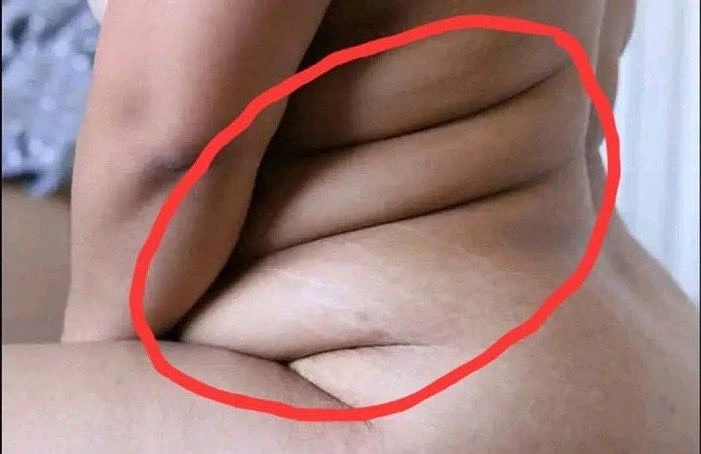
Let me start with the thing the diet industry has spent a lot of money making sure you never quite hear, or at least never hear clearly enough to believe. A back roll is not evidence of anything having gone wrong. It is skin and fat sitting on top of a rib cage, folding the way soft tissue folds when a body bends, sits, reaches for a seatbelt, or simply exists in a chair for more than four seconds. That is the entire phenomenon. There is no hidden second meaning, no verdict about your discipline, no quiet report card on how you’ve been eating. That’s it. That’s the whole scandal, and I want to walk you through what’s physically happening back there, because once you understand the actual mechanics, the moral panic around it starts to look as strange as it genuinely is. This isn’t a pep talk and I’m not here to inflate your self-esteem with vague kindness. It’s just anatomy, and the anatomy happens to be squarely on your side.
Your Back Is Built to Fold, and Here’s the Structure That Makes It Happen
Here’s the part almost nobody bothers to explain, probably because it’s harder to sell you a solution once you know it. The skin and fat on your back aren’t loose, drifting things looking for a place to sag. They’re tacked down to the muscle and bone underneath at specific, predictable points, anchored by bands of connective tissue that plastic surgeons literally refer to as zones of adherence. Picture a quilted jacket, the kind stitched down in a grid so the padding sits in neat sections instead of sliding around into one lump at the hem.
Your back is stitched down in more or less the same way, and that stitching is doing a job, holding your soft tissue in place against a frame that moves constantly. When tissue is anchored firmly in one spot and left free in the spot right next to it, the free part has somewhere to go, so it goes there. It gathers. It folds. The medical literature describes exactly this arrangement, a skin-and-fat envelope held tight to the rib cage by fibrous attachments, with the fat itself divided into separate compartments by those anchoring bands, and a roll is simply what becomes visible where two anchored zones meet and the tissue between them bunches up. It is not a malfunction of the design. Read that part twice, because it’s the hinge the whole article swings on: the fold is not the design breaking down, the fold is the design.
That structure is also why the rolls show up in roughly the same places from one person to the next, and why they have an actual shape instead of appearing at random like spilled water. The body follows a blueprint for how the back gets tacked down, the same broad plan in most of us, and the folds obediently follow that blueprint. A few useful things fall out of understanding it this way:
- The rolls are structural, not accidental. They appear where anchoring meets slack because that’s the only place they can appear.
- They’re patterned, not personal. The location is dictated by your anatomy’s layout, not by anything you did or failed to do this year.
- They move because you move. Bend, and the slack tissue gathers; straighten, and it spreads back out. The fold is a verb more than a noun.
Thin People Have Them Too, Which Tells You It Was Never Really About Fat

If back rolls were purely a fat-quantity problem, a simple case of too much padding, then they would vanish the instant a person got lean enough. They don’t, and this stubborn refusal to disappear is the single detail that gives the entire game away.
Plenty of slim, athletic, visibly lean people have back rolls, and the medical sources are refreshingly blunt about why: even people who lose a tremendous amount of weight often still have them afterward, because two things besides fat are always involved. The first is those fixed anchoring points, which stay exactly where they are no matter what the scale says. The second is skin itself, which has only a set amount of give.
When there is more skin than the frame beneath it needs at a given moment, whether from carrying a larger body earlier in life, or from losing weight faster than skin can retract, or simply from the elasticity you inherited and never got a vote on, that skin settles into folds regardless of how little fat sits under it. You cannot exercise away a connective-tissue attachment, and you wouldn’t want to. It’s holding your skin to your skeleton on purpose, and it’s doing that job whether you weigh 130 pounds or 230.
Which means the standard, endlessly repeated advice, do these five moves and melt your back rolls, is selling you something the human body does not actually offer for sale. Spot reduction is not real. You cannot instruct fat to leave from one specific region while staying put everywhere else, and the research on fat distribution is clear that where your body stores fat is governed largely by genetics and hormones, neither of which you selected from a menu. Even setting all that aside, the fold isn’t purely fat in the first place, so even a hypothetical magic fat-remover would leave the skin and the anchoring untouched. So when a stubborn roll refuses to respond to years of dedicated effort, planks and rows and pull-downs and clean eating and everything the internet promised would work, that is not you failing at your own body. That is your body calmly doing the completely ordinary thing that connective tissue and skin have always done. The failure was never yours. The premise was wrong.
Where They Sit, and Why the Mirror Shows Them More on Some Days Than Others
A few plain facts that take most of the mystery out of it, and take a fair amount of the shame out along with the mystery. Rolls tend to gather in a handful of predictable places, and knowing the map helps you stop reading meaning into it:
- Along the bra line, where a strap crosses the mid-back and the tissue organizes around it.
- Across the mid-back, where the natural zones of adherence create the clearest meeting point between anchored and free tissue.
- Low near the waist, where the torso folds when you sit and the soft tissue has the most room to gather.
Clothing does an enormous amount of the rest, more than most people ever suspect. A waistband pulled a notch too tight or a bra strap that digs in will manufacture a roll on a body that has none the moment the clothes come off, because you’ve pressed a compression line into the tissue and it simply folds over the line you created. That roll is the underwear’s handiwork, not a feature of you. And beyond clothing, the very same body will look different from one hour to the next, which is worth sitting with the next time a photo ambushes you. Posture rewrites the whole picture, since sitting and rounding forward gathers tissue that standing tall smooths right back out. So does ordinary bloating, so does hydration, so does the plain time of day.
The version of your back you catch in a bad-angle photo is not more honest than the one you see relaxed in the mirror. It is just one frozen position of a soft, moving, shifting thing, no more the “real” you than a single frame is the whole film.
The Health Question, Answered Honestly
People sometimes ask, reasonably, whether a back roll means something has gone wrong health-wise, and the fair answer, the one that respects both your intelligence and the actual science, is that a fold of skin and fat is not by itself a diagnosis of anything at all. Bodies carry fat. That is not a bug they are supposed to overcome, it is a core part of what they are built to do, since fat cushions organs, insulates against cold, and stores the energy that keeps you alive between meals, and it settles across the back exactly the way it settles everywhere else on you.
Where your particular body chooses to place that fat is set largely by genetics and hormones, the same two forces mentioned earlier, and a visible roll on your back tells you roughly as much about your underlying health as the small fat pad on your palm does, which is to say nothing in particular that a mirror is qualified to interpret. If there is a genuine health marker worth your attention, that is a conversation for an actual clinician who can weigh your whole picture, your history, your labs, your life, and it is emphatically not something a bad photo can reveal, and definitely not something a stranger typing under your post is equipped to diagnose.
I’m not going to hand you a routine for getting rid of them, and I want to be clear that this isn’t me coyly withholding a secret to keep you reading. It’s that the honest anatomical answer is that a fold where soft tissue meets an anchor point is a normal structural feature of how a back is assembled, and there’s nothing there to fix any more than there’s something to fix about the crease inside your elbow. Treating a normal feature as an emergency is precisely how an enormous number of people end up quietly miserable about a body that was working perfectly fine the entire time. A more useful redirection of all that energy is toward clothing that fits the body you actually have rather than compressing it into folds and then blaming the folds, since a bra or waistband sized to your real frame does more for the mirror than years of war against your own connective tissue ever will.