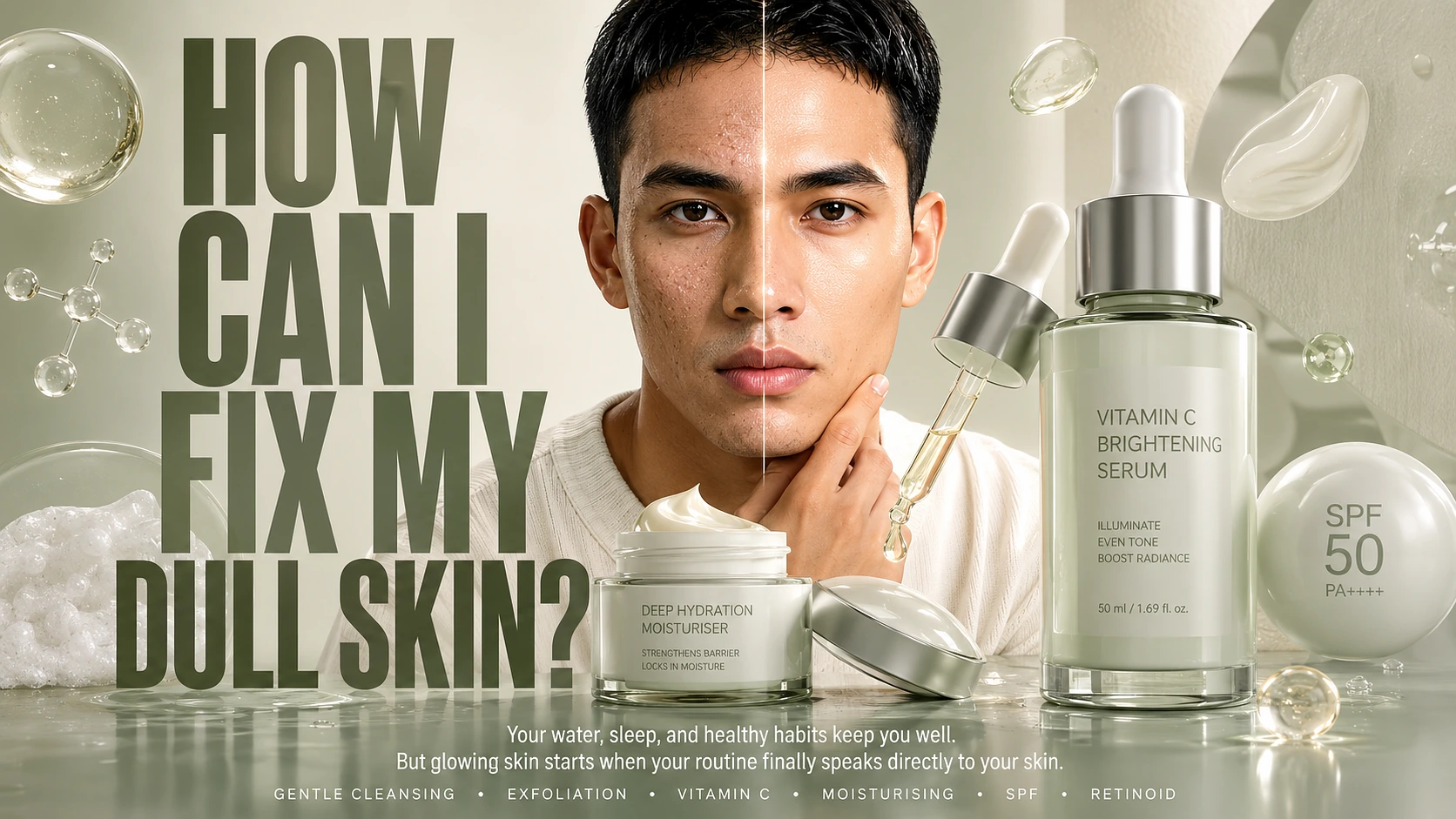
Your water, your sleep, your runs, your diet all doing exactly what they should, which is keeping you well. But glowing skin needs its own kit: gentle cleansing, regular exfoliation, Vitamin C, proper moisturising, sunscreen you actually apply well, and eventually a retinoid. Add those, stay with it for a couple of months, and that “nothing’s working” feeling almost always flips into “oh there it is.”
You weren’t doing too little. You were just missing the part of the routine that talks directly to your skin.
If you’ve ever stared at the mirror thinking “I’m doing everything right, so why does my skin still look so flat?” this one’s for you.
Here’s a message that lands in skin clinics all the time, and honestly, it could’ve been written by half the people reading this:
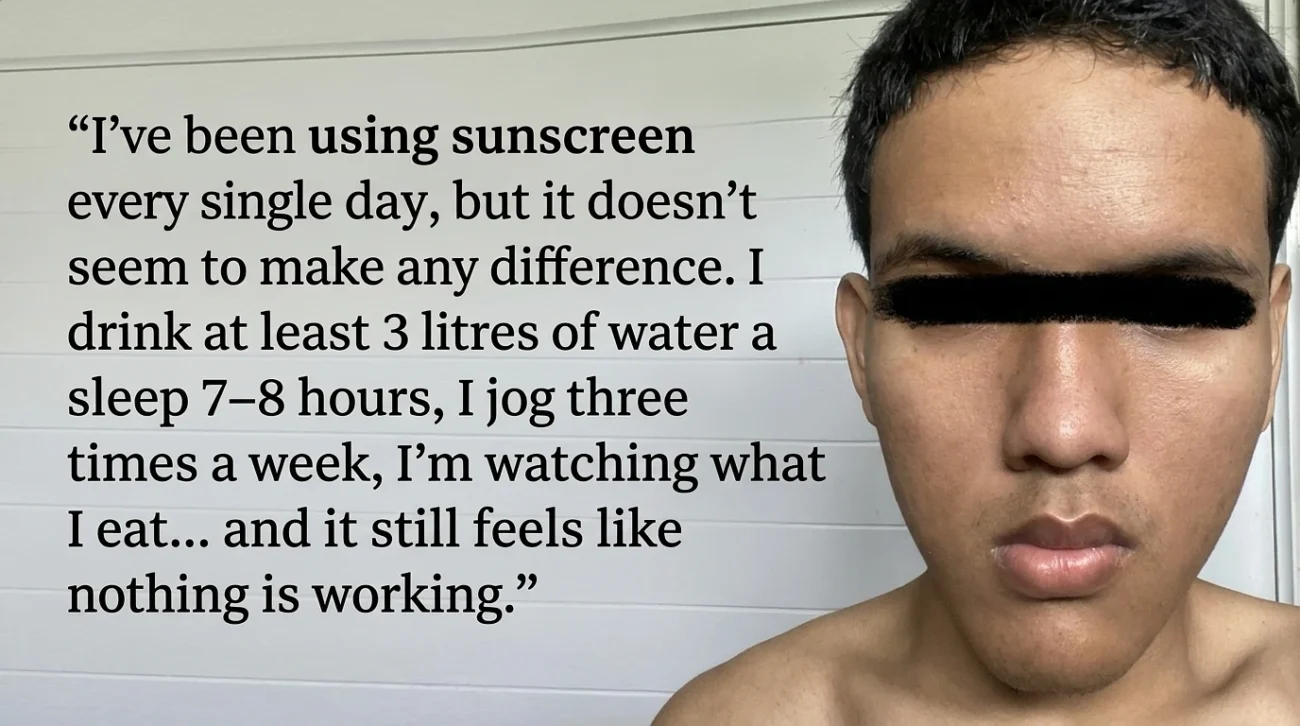
“I’ve been using sunscreen every single day, but it doesn’t seem to make any difference. I drink at least 3 litres of water a day, I sleep 7–8 hours, I jog three times a week, I’m watching what I eat… and it still feels like nothing is working.”
First things first:you’re not doing anything wrong. If anything, you’re already ahead of most people. The problem is sneakier than effort. Dull skin almost never gets fixed by good habits alone — it needs a few specific things that water, sleep and a jog around the block just can’t give it.
Let me walk you through what’s actually going on, and what to change.
So What Even is “Dull” Skin?
“Dull” isn’t one single thing it’s a look. It’s skin that doesn’t bounce light back the way fresh, healthy skin does. When you pull it apart, dullness usually comes down to some mix of:
a layer of dead skin cells sitting on the surface, scattering light instead of reflecting it.
skin that’s dehydrated (which, and this is the kicker, isn’t the same as you being dehydrated).
a worn-down skin barrier that leaves everything looking tired and a little grey.
uneven tone or faint pigmentation muting your overall brightness.
a slow rate of cell turnover, where your skin just isn’t renewing itself fast enough.
Notice anything? Almost none of that gets solved by hydration, diet or cardio. Those keep you healthy but the surface of your skin needs its own thing going on.
Why Your Habits Aren’t Enough (And That’s Completely Normal)
This is the part that throws people, so let me say it plainly.
Drinking water hydrates your body, not the outer layer of your face. Once you’re properly hydrated, chugging more water doesn’t add some bonus glow. The moisture in your skin comes mostly from what you put on top of it and from having a healthy barrier that actually traps that moisture in.
And sunscreen? It’s brilliant, genuinely one of the best things you can do but it protects, it doesn’t repair. If you’ve already picked up some sun damage or uneven tone over the years, sunscreen won’t reverse it. It just stops things getting worse.
There’s also a quiet second problem: most people use far too little of it. The amount your face actually needs is about two finger-lengths roughly a quarter to half a teaspoon. A thin morning smear with no top-up later in the day leaves you under-protected, which slowly feeds right back into the dullness you’re trying to get rid of.
So the missing piece was never more willpower. It’s the right products, used on your skin, consistently.
What Actually Fixes Dullness
You don’t need a shelf full of stuff. You need a handful of the right things, used regularly. Here’s the framework.
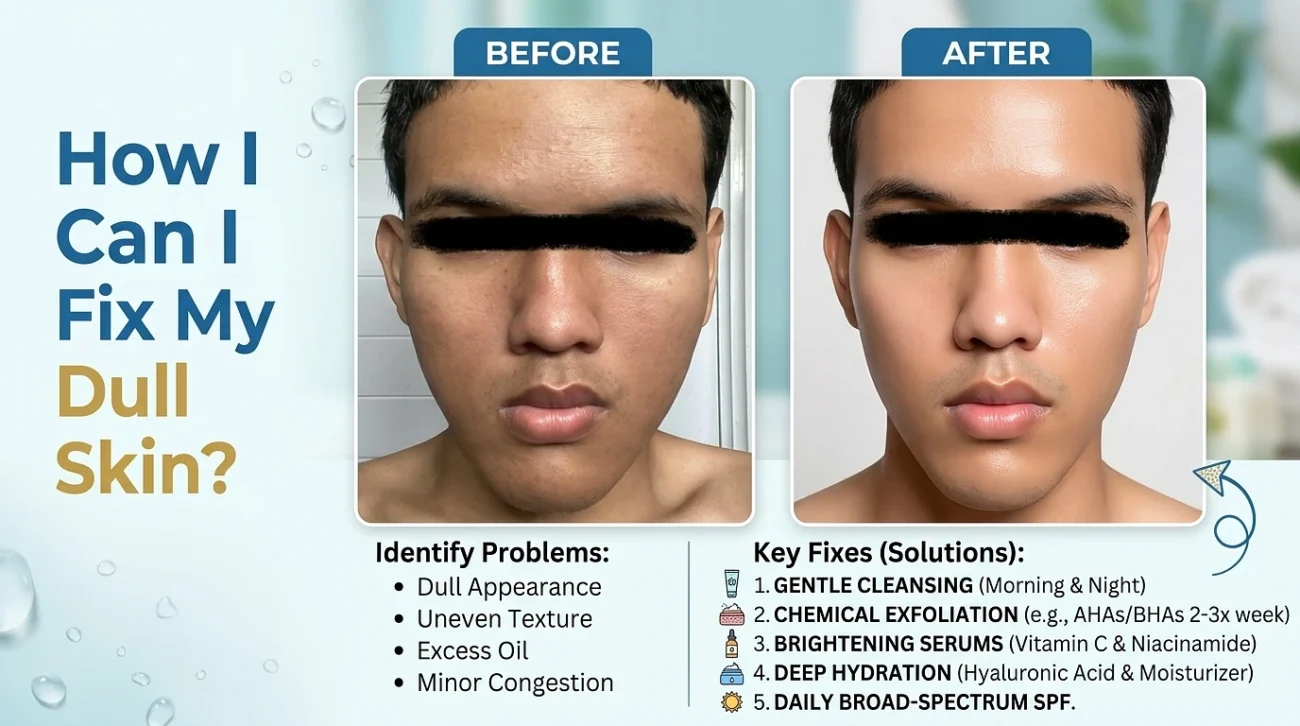
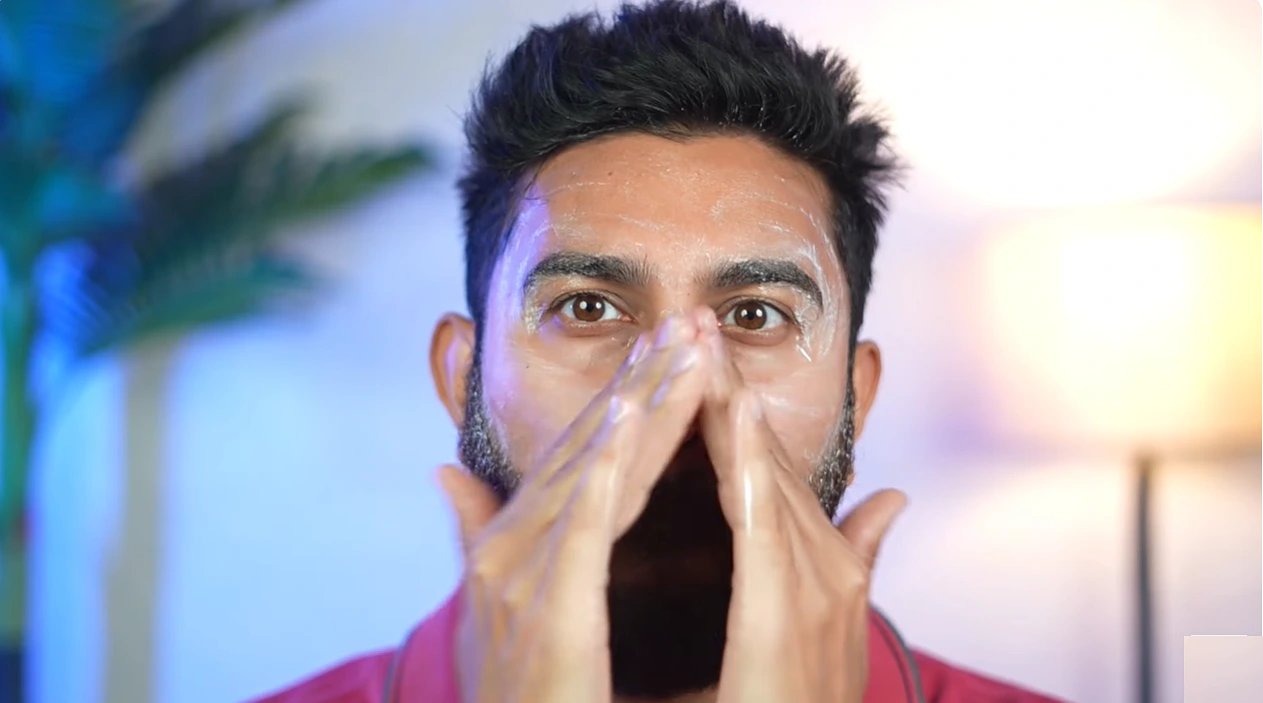
Cleanse gently, morning and night. Use something mild that doesn’t leave your skin feeling tight. That tight, squeaky-clean feeling people chase? It usually means you’ve stripped your barrier and made the dullness worse.
Exfoliate this is the big one. If you're "doing everything" and still look flat, this is almost certainly what's missing. Exfoliating clears away that dead-cell buildup so the fresh, brighter skin underneath can actually show. Reach for a chemical exfoliant rather than a scrub glycolic or lactic acid for glow, salicylic acid if you're oily or break out. Start two or three times a week, not daily, or you'll just irritate yourself. And skip the gritty scrubs; they cause more harm than good.
Add a Vitamin C serum in the morning. This is the classic brightening ingredient it evens out tone and gives skin that lit-from-within quality over time. Goes on after cleansing, before moisturiser.
Moisturise every day, even if you’re oily. Look for hyaluronic acid, glycerin, ceramides or niacinamide. Well-hydrated skin with an intact barrier is what glowing skin looks like there’s no shortcut around it. Oily skin can keep it light with a gel; dry skin needs something richer.
Keep the sunscreen – just use it properly. You’ve already got this habit, so just tighten it up: SPF 50 or higher, broad-spectrum, two finger-lengths’ worth, and a top-up every couple of hours if you’re outside or sweating (worth remembering on those jogs).
Bring in a retinoid at night, once you’re ready.Retinol, or prescription tretinoin if you see a dermatologist, speeds up cell turnover and smooths everything out. It’s one of the most powerful long-term tools for radiance but ease into it. Start twice a week, and don’t pile it on the same nights as your exfoliant when you’re just beginning.
And a quick word if you’re a guy: a lot of lower-face dullness is really just shaving irritation and ingrown hairs. Use a sharp blade, shave with the grain after warming the skin with water, and moisturise straight after. It makes a bigger difference than you’d think.
Give It Time
Skin is slow. The surface renews itself roughly every four to six weeks, and the brightening you get from Vitamin C and retinoids usually doesn’t show up properly until you’re eight to twelve weeks in. So if you’ve been at this for a couple of weeks and feel like nothing’s happening that’s not failure, that’s just the timeline.
Consistency beats intensity every time. Three products you actually use for three months will do far more than ten products you reach for whenever you remember.
A Simple Routine to Copy
Morning: gentle cleanser → Vitamin C → moisturiser → sunscreen (plenty of it, and reapply outdoors).
Night: gentle cleanser → exfoliant or retinoid (alternate nights once you’ve added the retinoid) → moisturiser.
That’s the whole thing. Build the habit first, then add the actives one at a time.
When it’s Worth Seeing a Dermatologist
A good routine sorts out most dullness, but go and see someone in person if:
the dullness comes with stubborn dryness, flaking, redness or itching.
you’ve got dark spots, patches or melasma you want treated properly.
you’ve been genuinely consistent for three months and still see nothing.
you feel unusually tired or run-down alongside it occasionally dull, sallow skin is your body flagging something like low iron or a thyroid issue, and that’s worth a quick check.
A dermatologist can prescribe stronger stuff, suggest in-clinic treatments, and rule out anything medical.
About Dr. Aanchal Panth (Dermatologist)
Dr. Aanchal Panth is a premier skin specialist and the driving force behind Dermafollix, a state-of-the-art dermatology clinic located in Surat, Gujarat. Grounded in the belief that every individual's skin is unique, she specializes in delivering advanced, highly personalized treatments tailored specifically for desi skin. Dr. Panth is deeply committed to patient education empowering her clients to make informed decisions about their dermatological health while providing accessible, effective clinical care in a welcoming environment.