

Blog
The First Sign of Syphilis Is a Painless Sore That Heals Itself. That’s the Trap

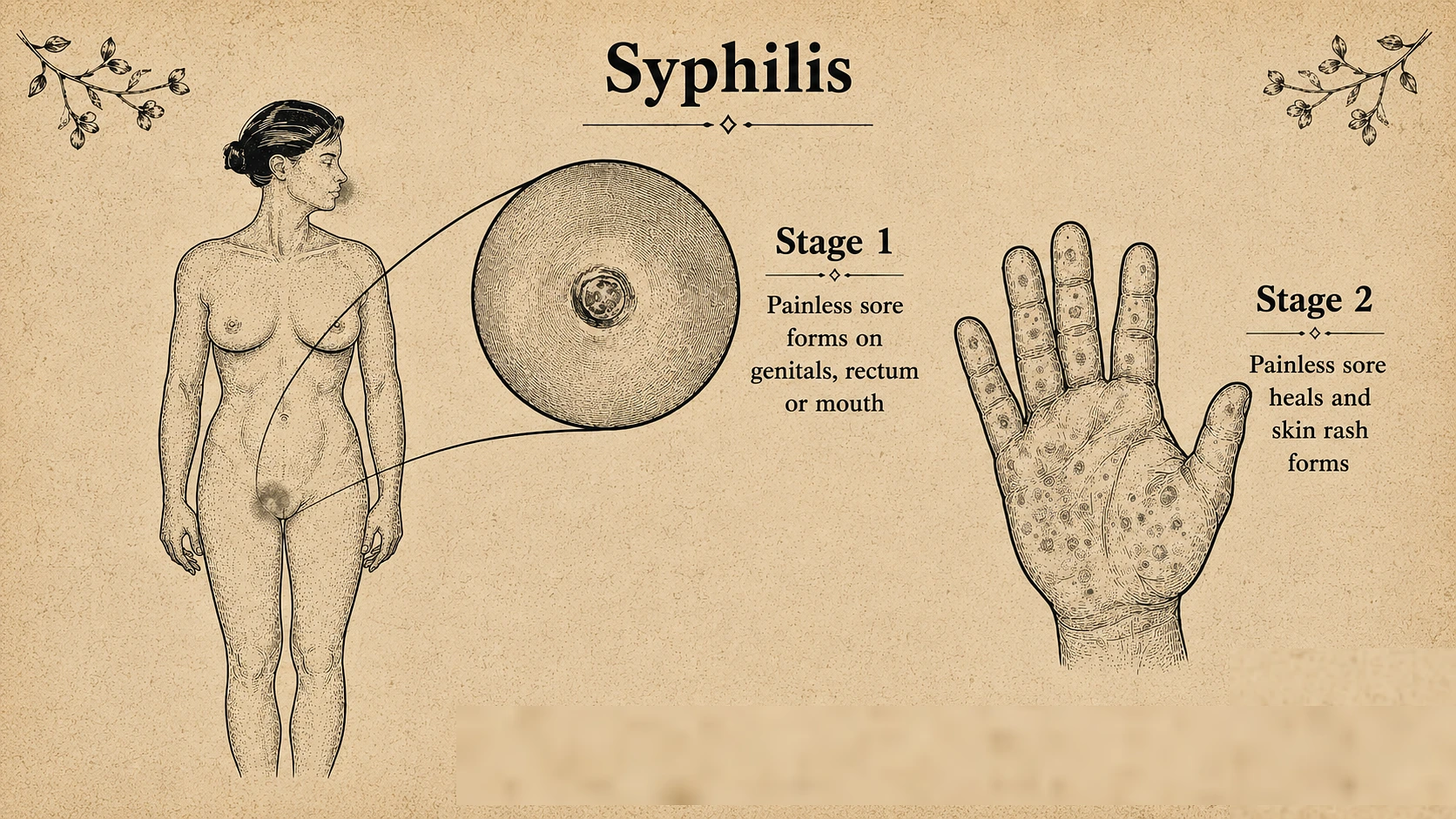
Most diseases warn you by hurting. Something aches or burns or itches badly enough that you finally call a doctor. Syphilis does the opposite, and that’s exactly what makes it dangerous, because the first sign is usually a single sore that doesn’t hurt at all, and then a few weeks later it heals up and vanishes on its own whether you do anything about it or not. You think you dodged something. You didn’t. The sore leaving is not the infection leaving, and that gap between what your body is telling you and what’s actually happening is the whole reason this ancient disease is surging again right now.
The Sore Doesn’t Hurt, So Most People Never Get It Checked
Here’s the first problem, built right into the biology. The opening sign of syphilis is a chancre, a firm, round ulcer that shows up where the bacteria got in, usually somewhere between ten and ninety days after exposure, with about three weeks being the typical wait.
And it's painless. That word is doing a lot of work, because pain is what drives people to a clinic and this thing skips it. Worse, the sore often turns up where you can't easily see it or wouldn't think to look, inside the vagina, inside the rectum, in the mouth, on the cervix where a woman would have no way of noticing it at all. So you've got a symptom that doesn't hurt, might be hidden, and looks like it could be an ingrown hair or a small cut. It's genuinely easy to miss, and plenty of people never register they had it, while the bacteria are already spreading through the body.
It Heals On Its Own, And That Convinces People They’re Fine
This is the cruelest part, and it’s the trap the title is pointing at. Even if you do notice the sore, it goes away by itself, healing in roughly three to six weeks with or without any treatment.
Sit with what that does to a person’s thinking. You saw something, you were worried, maybe you meant to get it looked at, and then it cleared up before you got around to it, so naturally you conclude it was nothing, or that your body handled it. That conclusion feels completely reasonable and it’s completely wrong. The sore healing has nothing to do with the infection clearing. The bacterium, a spirochete called Treponema pallidum, is still very much in you, and it heals regardless of treatment specifically because healing the sore was never the same event as beating the disease. This is the moment the disease wins, right when the patient relaxes.
The Rash That Comes Next Also Fades, Which Fools You A Second Time
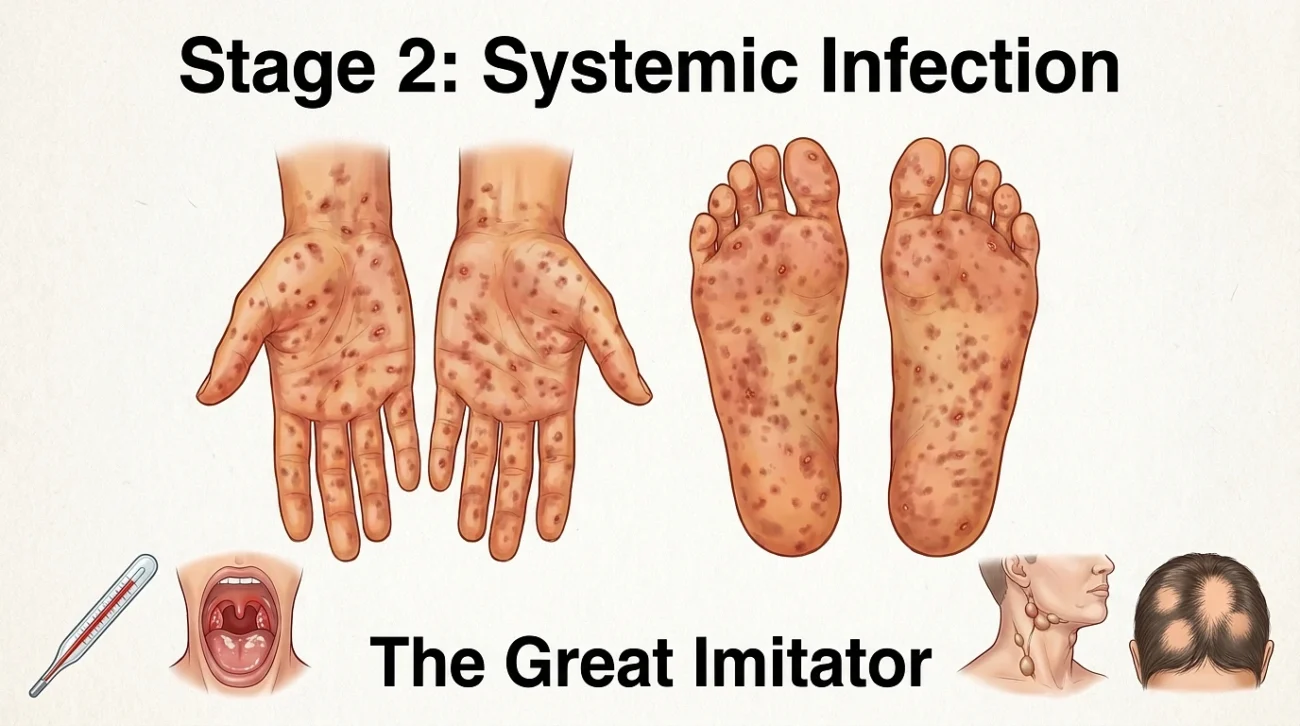
If the infection isn’t treated it moves into a second stage, usually a few weeks to a couple of months after the sore, and now it goes systemic. The classic sign is a rash, and it has one genuinely distinctive feature, it often shows up on the palms of the hands and the soles of the feet, which most rashes don’t.
There can be more with it: a fever, sore throat, swollen glands, patchy hair loss, a run-down feeling. And here’s the pattern repeating, because this stage also resolves on its own, handing the person a second false all-clear. Some of these rashes are so faint they get written off anyway. So the disease has now fooled you twice with the same trick, show a symptom, remove the symptom, let you believe you recovered, all while it digs deeper. It earned its old nickname, “the great imitator,” because it mimics so many other illnesses that even doctors have to actively think to test for it.
Then It Goes Silent For Years, And That Silence Is Not Safety
After the second stage fades, syphilis enters the latent phase, and this is where the long con plays out. No symptoms at all, sometimes for years, sometimes for the rest of a person’s life.
In up to two-thirds of untreated people it stays latent and never advances, which sounds reassuring until you flip it around, because that means a real share of people do progress. When it resurfaces as tertiary syphilis, often ten to thirty years later, it stops being subtle.
What The Late Stage Actually Does
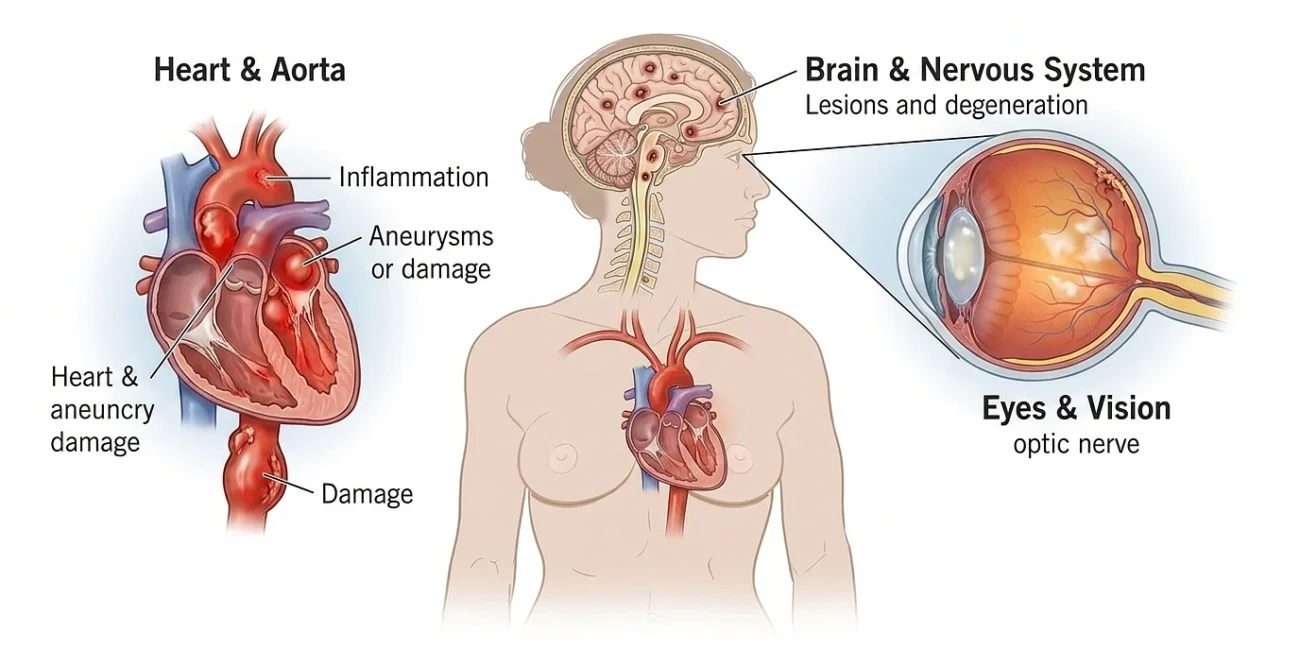
This is the damage that was quietly avoidable the whole time:
- It can attack the heart and the major blood vessels, including the aorta.
- It can wreck the nervous system and the brain, causing anything from strokes to dementia.
- It can take your sight, and eye and ear involvement can actually appear at any stage, not only at the end.
The tragedy of all of it is that every bit was preventable back when the only sign was a sore that didn’t even hurt.
While You’re Deciding It Was Nothing, It Can Reach A Pregnancy
There’s a version of this trap that doesn’t wait decades, and it’s the one driving the current alarm. A pregnant woman with untreated syphilis can pass it to her baby, and congenital syphilis is devastating, causing stillbirths, miscarriages, newborn deaths, and lifelong damage in the babies who survive.
This is where the painless-sore problem stops being abstract, because a woman who never felt the sore, never saw the hidden chancre, never connected a faded rash to anything, can carry the infection into a pregnancy with no idea it’s there. And the numbers have gone the wrong way, hard. Congenital syphilis cases in the United States are roughly 700 percent higher than they were a decade ago, and 2024 marked the twelfth straight year of increases, with nearly four thousand cases. The CDC found that a lack of timely testing and treatment during pregnancy contributed to the vast majority of them, which is the devastating part, because it means most were catchable. Some states have been hit especially hard, Florida has carried among the highest congenital rates in the country, and Mississippi’s maternal syphilis rate rose more than a thousand percent over a decade before the state declared a public health emergency.
The Whole Trap Only Works If You Don’t Test, And Testing Is Easy
So after all of that, the good news, because everything above collapses the moment you do one simple thing. Syphilis is found with a straightforward blood test, and it’s completely curable, especially early, with penicillin, an antibiotic that has worked on this disease for generations.
The entire danger of syphilis is a danger of silence. The painless sore, the vanishing rash, the symptomless latent years, all of it relies on you reading the absence of symptoms as the absence of disease. So the one move that beats it is refusing to trust that logic, and if you’ve had a possible exposure, or a sore that came and went, or you’re pregnant, you get the blood test regardless of how fine you feel, because feeling fine is not evidence here. That’s the thing to take away from all this. With most illnesses your body tells you when something’s wrong, and with syphilis the silence is the symptom, and a test is the only thing that speaks the truth. The cure is old and reliable, the test is cheap, and the whole grim progression stops cold when it’s caught early.